






AGENDA AT A GLANCE - SUBJECT TO CHANGE

Thursday, 17 Sep 2026

GEO East Coast Regional Event – 8.00 AM - 6.30 PM

8.00

Registration opens

8.00 - 9.00

Networking breakfast

9.00 - 9.10

Opening Words

9.10 - 9.20

Transition

9.20 - 10.10

Breakout Session I 
CPE credits available

10.10 - 10.20

Transition

10.20 - 11.10

Breakout Session II 
CPE credits available

11.10 - 11.40

Morning Break

11.40 - 12.40

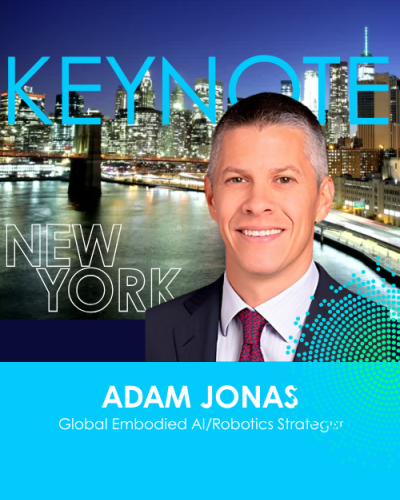
Keynote - Adam Jonas, Morgan Stanley
Space, Robotics, and the Intelligence Economy

12.40 - 13.40

Lunch and Networking 


13.40 - 14.30

Breakout Session III
CPE credits available

14.30 - 14.40

Transition

14.40 - 15.30

Breakout Session IV 
CPE credits available

15.30 - 16.00

Afternoon Break

16.00 - 17.00

Closing Session and Prize Giveaway
GEO New York Chapter Closing Session

17.00 - 18.00

Happy Hour and Networking

MEET OUR KEYNOTE SPEAKER

Thursday, 17 September 2026
11.40 - 12.40

Adam Jonas
Space, Robotics, and the Intelligence Economy

Adam Jonas

Prepare to look beyond today's headlines and into the technologies shaping tomorrow's economy as Adam Jonas, Global Embodied AI/Robotics Strategist at Morgan Stanley, takes the stage at GEO's East Coast Regional Event. In his keynote, Space, Robotics, and the Intelligence Economy, Adam explores how artificial intelligence, robotics and the space economy are converging to transform business, investment and the future of work.

You'll discover:

  • How AI-enabled robotics are reshaping industries and creating new business opportunities
  • Why the intelligence economy will redefine the way organisations innovate, compete and grow
  • The emerging technologies—from autonomous systems to the space economy—that leaders should be preparing for today
  • What these global shifts mean for the future of work, business strategy and long-term value creation

Drawing on decades of experience advising global investors and researching the world's most transformative technologies, Adam will share a forward-looking perspective on the trends redefining our economy—and the opportunities they present for organisations ready to embrace change.

Don't miss this thought-provoking keynote on 17 September and gain fresh insights into the technologies that will shape the next decade of business.

BREAKOUT SESSIONS

To print the session titles and descriptions that interest you, click LIST VIEW, select your preferred sessions, and click PRINT MY SESSIONS

This will generate a PDF that you can download, save, or print.

Session timings are subject to change.

Filter by:

Thursday, 17 Sep 2026, 09:20 - 10:10
1.1 Global Equity Strategies for a Changing Business Environment

Sean Trotman, FGE, BDO
Zach Crumpton, Computershare
Issuer TBC

Cash deferral
Employee stock purchase plans (ESPP)
Performance cash
Performance shares
USA
BREAKOUT I

Economic uncertainty, changing workforce priorities, and increasing cost pressures are prompting organizations to reassess their equity compensation strategies. This session examines emerging approaches to plan design, tax efficiency, and operational flexibility that help organizations align equity programs with business objectives, shareholder expectations, and long-term talent strategies.

KEY LEARNING POINTS:

  • Identify market trends influencing the redesign of global equity compensation programs.
  • Evaluate strategies that improve tax efficiency, cost management, and long-term incentive value.
  • Assess how equity plan design can better align with organizational objectives, workforce priorities, and shareholder expectations.
Thursday, 17 Sep 2026, 09:20 - 10:10
1.2 Building Resilient Stock Plan Workflows for a Fast-Moving Organization

David Lanka, Bank of America
Paul Kolano, Bank of America 
Issuer TBC

USA
BREAKOUT I

High-performing equity teams need operational processes that can adapt to organizational growth, global expansion, and increasing complexity. This session explores practical approaches for redesigning stock plan workflows, reducing manual effort, improving data quality, and evaluating automation and AI while maintaining strong governance and internal controls.

KEY LEARNING POINTS:

  • Identify operational bottlenecks within stock plan administration workflows and assess opportunities to improve scalability and efficiency.
  • Evaluate automation and AI-enabled solutions that reduce manual processing while maintaining appropriate governance and control frameworks.
  • Describe process improvements that strengthen data quality, cross-functional collaboration, and year-end readiness across the equity administration lifecycle.
Thursday, 17 Sep 2026, 09:20 - 10:10
1.3 What Global Participants Really Think About Equity

Emily Cervino, FGE, Fidelity
Noone Janjigian, Thermo Fisher Scientific

Employee stock purchase plans (ESPP)
Performance cash
Performance shares
Restricted shares
Stock options
USA
BREAKOUT I

New global research provides fresh insight into how employees perceive equity compensation and what influences participation, confidence, and engagement. This session connects participant feedback with practical plan design, communication, and education strategies to help organizations improve the overall employee experience and maximize the value of their equity programs.

KEY LEARNING POINTS:

  • Identify the factors that most influence employee confidence and engagement with equity compensation.
  • Assess how plan design and communication practices affect participant understanding and outcomes.
  • Evaluate education strategies that improve equity participation across diverse employee populations.
Thursday, 17 Sep 2026, 10:20 - 11:10
2.1 Global Share Plans Through a Season of Change

Lindsay Minnis, Baker McKenzie
Tessa Patti, Marsh McLennan

Employee stock purchase plans (ESPP)
Restricted shares
Stock options
USA
BREAKOUT II

Global share plans continue to evolve as organizations respond to changing tax, legal, and regulatory requirements across multiple jurisdictions. Drawing on practical experiences from multinational issuers operating in markets including Argentina, China, Israel, Japan, Singapore, the United Kingdom, the United States, and Vietnam, this session explores how organizations are adapting their compliance and governance strategies while maintaining consistent employee experiences.

KEY LEARNING POINTS:

  • Identify key regulatory and compliance developments affecting multinational share plans across major global markets.
  • Evaluate governance and administration approaches that support consistent compliance across multiple jurisdictions.
  • Assess practical strategies for managing regulatory change while maintaining effective global equity programs.
Thursday, 17 Sep 2026, 10:20 - 11:10
2.2 The Three A's of Modern Equity Administration

Rob Williams, KPMG
Craig Rubino, Morgan Stanley at Work
Issuer TBC

Equity deferral
Performance shares
Restricted shares
USA
BREAKOUT II

Artificial intelligence, automation, and data accuracy are reshaping the way organizations administer equity compensation. Through practical issuer case studies, this session explores how technology can improve operational efficiency, automate complex processes, and enhance the experience for both participants and equity administration teams while maintaining appropriate controls.

KEY LEARNING POINTS:

  • Identify opportunities to apply AI and automation within equity administration processes.
  • Evaluate technology solutions that improve efficiency, accuracy, and participant experience across complex administrative scenarios.
  • Assess governance considerations that support the responsible implementation of automated equity administration processes.
Thursday, 17 Sep 2026, 10:20 - 11:10
2.3 Demonstrating the Value of Broad-Based Equity Ownership

Stanley Feldman, Work to Own 
Jonathan Wachtel, Work to Own

Employee stock purchase plans (ESPP)
Equity deferral
Performance shares
Restricted shares
Stock appreciation rights (SAR)
Stock options
BREAKOUT II

Growing research continues to examine the relationship between broad-based equity ownership and long-term business performance. This session reviews new empirical findings, explores the role of AI in large-scale research analysis, and discusses how organizations can present evidence-based business cases for expanding employee equity ownership.

KEY LEARNING POINTS:

  • Summarize research findings on the relationship between broad-based equity ownership and shareholder value.
  • Describe how AI-supported research methods can improve the collection and analysis of equity compensation data.
  • Evaluate evidence-based approaches for presenting the business case for broad-based equity ownership to senior leadership.
Thursday, 17 Sep 2026, 13:40 - 14:30
3.1 Making Global Equity Work Across Borders

Lilly Blacher, Fidelity
Jackie Curran, KPMG
Tram Le, Klaviyo 

Discount shares
Employee stock purchase plans (ESPP)
Executive plans
Performance cash
Performance shares
Restricted shares
USA
BREAKOUT III

Administering global equity plans requires organizations to balance consistent governance with complex local tax, regulatory, and operational requirements. Through practical case studies from experienced issuers, this session examines governance frameworks, mobility challenges, compliance strategies, and communication practices that help organizations manage global equity programs more effectively.

KEY LEARNING POINTS:

  • Identify common tax, regulatory, and mobility risks affecting multinational equity programs.
  • Evaluate governance practices that support consistent administration across multiple jurisdictions.
  • Describe communication strategies that improve participant engagement while supporting global compliance objectives.
Thursday, 17 Sep 2026, 13:40 - 14:30
3.2 Equity in Motion During Organizational Change

Jorge Martin, J.P. Morgan Workplace Solutions
Issuer TBC

USA
BREAKOUT III

Organizational change can place significant pressure on equity programs, from restructurings and global expansion to acquisitions, carve-outs, and rapid growth. This session explores how organizations maintain data integrity, governance, and participant confidence while adapting equity administration processes during periods of structural change.

KEY LEARNING POINTS:

  • Identify operational and governance risks that arise during organizational restructuring and business transformation.
  • Evaluate administration practices that maintain accurate equity records and participant communications throughout periods of change.
  • Assess governance frameworks that support business continuity while managing evolving organizational structures.
Thursday, 17 Sep 2026, 13:40 - 14:30
3.3 Preparing for the Next Chapter of Executive Compensation Disclosure

Terry Adamson, FGE, Infinite Equity
Issuer TBC

Executive plans
USA
BREAKOUT III

Executive compensation disclosure continues to evolve as organizations respond to changing SEC requirements, increasing investor scrutiny, and growing expectations for governance and transparency. This session examines practical approaches to strengthening reporting processes, improving data readiness, and enhancing cross-functional collaboration to support accurate, timely, and defensible disclosures.

KEY LEARNING POINTS:

  • Identify emerging SEC disclosure requirements that may affect executive and equity compensation reporting.
  • Assess governance, data, and internal control processes that support accurate and timely disclosures.
  • Evaluate cross-functional practices that strengthen collaboration across Legal, Finance, HR, Equity Administration, and Investor Relations.